Seoul Museum of History
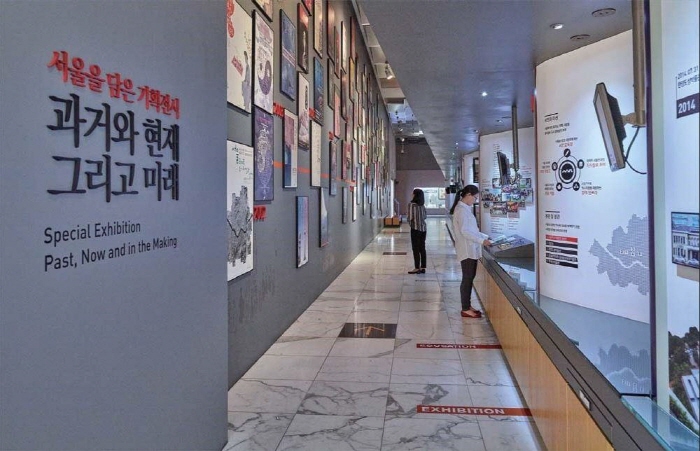
서울역사박물관 · Museum · Seoul
The giant scale model of Seoul on the top floor is worth 20 minutes on its own.
Check how busy it is right now →Live crowd levels for Seoul, 14-day forecast elsewhere. No sign-up.
- Admission
- Free
- Opening hours
- 09:00 – 18:00
- Closed
- Mondays
- Quietest day
- Tuesday — about 16% fewer foreign visitors than an average dayBusiest: Saturday. Based on Korea Tourism Data Lab foreign-visitor counts for Jongno-gu, Seoul.
- Payment
- Cards accepted
- English
- English signs, some staff
- Nearest subway
- Gwanghwamun Station (광화문역) · Line 5About 5 minutes on foot
- Fee checked
- 2026-09
Was something different when you went? Tell us — travelers keep these pages right.
When to go
Seoul Museum of History is closed on Mondays. Arriving on a closing day is the most common way to lose a morning in Korea, and the gate will not make an exception for a visitor who has come a long way.
Counting foreign visitors to Jongno-gu, Seoul over twelve weeks, Tuesday is the quietest day you can actually go and Saturday the busiest — a difference of about 30%. These are district-wide figures rather than a headcount at the gate, so treat them as a tendency.
Opening hours are 09:00 to 18:00. Tour groups tend to arrive mid-morning and again after lunch; the first hour after opening is normally the quietest stretch of any day.
What it costs, and what to bring
Entry is free. Nothing needs to be booked or queued for in advance.
Cards are accepted. Foreign Visa and Mastercard work almost everywhere in Korea, and contactless is normal.
English signage is partial — enough to find your way, not enough to explain what you are looking at. The Korean name above is worth showing to a taxi driver or a passer-by; it works better than pronouncing it.
Getting there
The nearest subway stop is Gwanghwamun (광화문역) on Line 5, about 5 minutes on foot. Seoul's subway signs and announcements are in English, and a T-money card bought at any convenience store works on every line and bus.
Google Maps · Naver Map · Kakao Map
Google Maps shows public transport in Korea but not walking routes. Naver or Kakao Map gives walking directions.
Eat nearby
Seochon Village is 889 m away. Tongin Market, at the edge of Seochon, is where office workers and locals buy lunch one spoonful at a time.
- Coin lunchbox 엽전 도시락 ₩5,000–10,000
- Oil tteokbokki 기름떡볶이 ₩4,000–6,000
Namdaemun Market is 1.4 km away. Whole alleys given over to one dish each. Follow the smell.
- Braised hairtail fish 갈치조림 ₩12,000–18,000
- Knife-cut noodles 칼국수 ₩6,000–9,000
- Sweet filled pancake 호떡 ₩1,500–3,000
Prices are per person and were checked in September 2026. Market stalls are often cash-only even where restaurants take cards.
Near here
- Gyeonghuigung Palace167 m
- Gwanghwamun Square600 m
- Deoksugung Palace650 m
- Cheonggyecheon Stream754 m
- Seochon Village889 m